As part of Crossref’s 25th anniversary celebrations, we hosted a satellite event in Medan, welcoming around 100 members from across Indonesia.
The day began with a lightning talk by Prof. Drs. Sriadhi, S.T., M.Pd., M.Kom, who spoke on “Shaping the Future of Research: Integrity, Openness, and Impact.” His reflections set the tone for a day focused on shared learning and collaboration.
Mochammad Tanzil Multazam, our Sponsoring Organization from Relawan Jurnal Indonesia, followed with an introduction to Crossref and a live demonstration of the newly updated Participation Reports tool. Participants explored how the tool visualizes their metadata coverage and provides gap reports highlighting records that need enrichment. It was especially meaningful that the Indonesian community was the first to experience this update in person, and attendees reviewing their own institutional reports during the session.
We were equally excited to welcome the Public Knowledge Project (PKP). Maria Lamury introduced the upcoming Publication Facts Label (PFL) plugin for OJS, inspired by the familiar Nutrition Facts Label. Designed to present key data clearly and consistently, the PFL will support OJS versions 3.3 to 3.5, and our community was among the first to learn about it.
In the afternoon, participants joined the Annual Meeting livestream, hearing perspectives from Soichi Kubota (J-STAGE/JST), Leena Shah (DOAJ),and Susan Murray (AJOL). We also heard updates on Participation Reports and the Record Registration Form from Patrick Vale, and enjoyed a “short research story” using the Crossref API by Luis Montilla. Jonas Raoni Soares da Silva (PKP) closed the session with practical guidance on upgrading OJS—particularly meaningful for Indonesia, home to the world’s most extensive OJS user base.
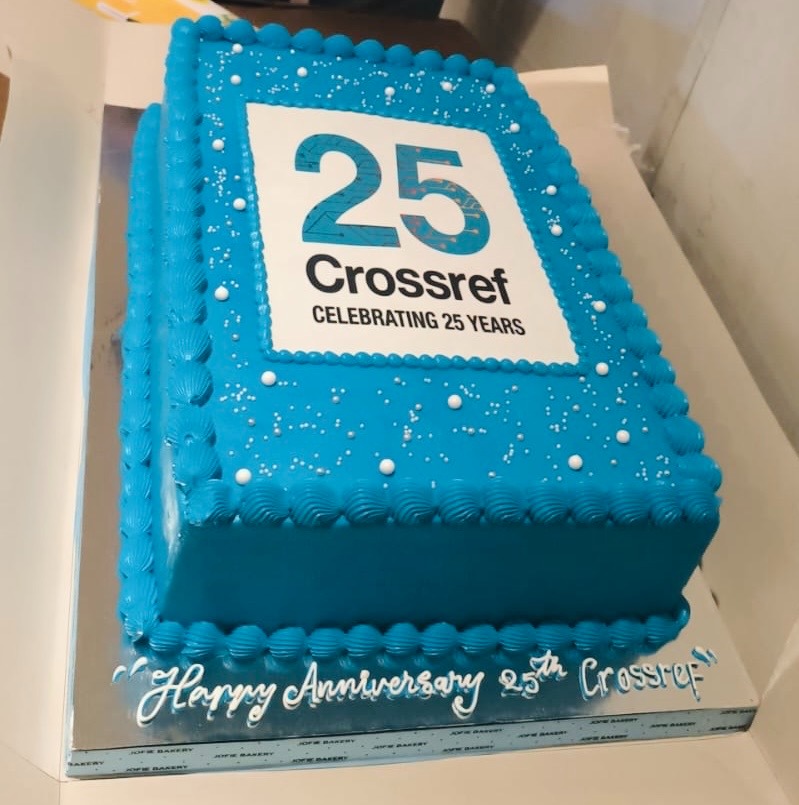
We marked the occasion with a celebratory cake for Crossref’s 25th anniversary and extend our sincere gratitude to our ambassadors, Zulidyana D. Rusnalasari and Fauji Nurdin, as well as the dedicated Relawan Jurnal Indonesia team: TM Diansyah, Mesran, Dodi Siregar, Abdul Karim, Rahmat Hidayat, Dina Nazriani, Robbi Rahim, Maulidya Rochmah, Andista Candra Yusro, and Amardyasta Galih Pratama. Their support and enthusiasm made this event truly special.
Connecting with the Indonesian community, hearing their feedback, and seeing the enthusiasm around improving metadata quality reinforced the strength of this collaboration.
The full event recording is available here.


 brought together 25 members from across the city to a familiar space to engage while joining the livestream of the Annual Meeting. A highlight of the day was celebrating